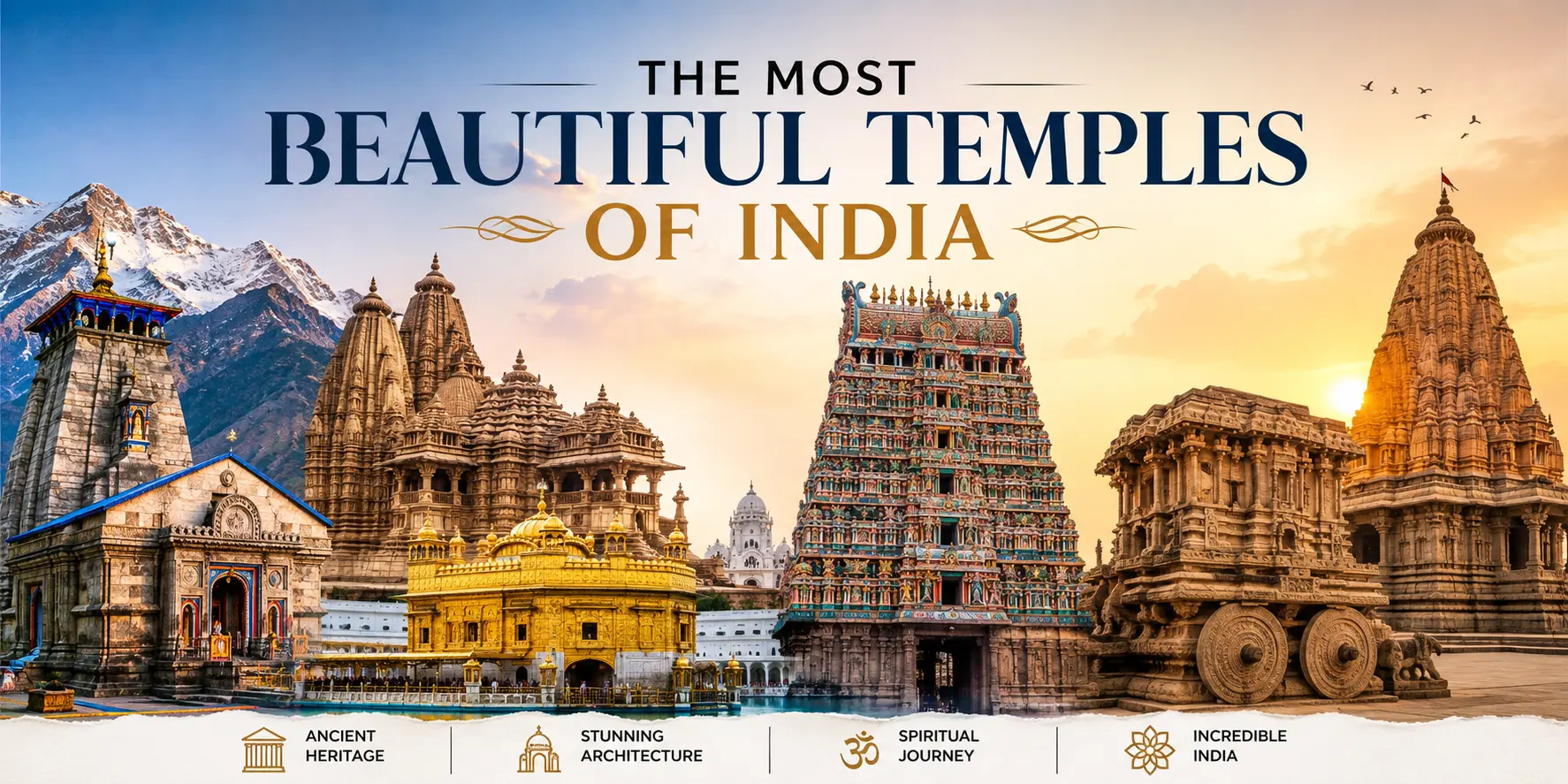
India is home to thousands of temples, each with its own story, architectural style, and spiritual importance. From snow-covered Himalayan shrines to magnificent temples on the southern coast, these sacred places attract millions of devotees and travelers every year.
Whether you are planning a pilgrimage, love history, or simply enjoy exploring beautiful places, this guide will help you discover some of the most beautiful temples of India.
Why India’s Temples Are So Special
Indian temples are more than places of worship. They represent centuries of art, culture, engineering, and devotion. Every temple reflects the traditions of the region where it was built, making each one unique.
Highlights include: Stunning architecture, Rich historical significance, Peaceful spiritual atmosphere, Intricate carvings and sculptures, Grand festivals and celebrations.
1. Kedarnath Temple, Uttarakhand
Located in the majestic Garhwal Himalayas, Kedarnath Temple is one of the holiest Hindu temples dedicated to Lord Shiva. Situated at an altitude of approximately 3,583 meters (11,755 feet), the temple is surrounded by breathtaking snow-covered peaks and the serene Mandakini River, making it one of India’s most beautiful spiritual destinations. Kedarnath is part of the sacred Char Dham Yatra and the Panch Kedar pilgrimage. Every year, millions of devotees and travelers visit this ancient temple to seek blessings while enjoying the spectacular Himalayan scenery. Whether you are on a spiritual journey or simply love mountain landscapes, Kedarnath offers an unforgettable experience.
The best time to visit Kedarnath is from May to June and September to October, when the weather is pleasant and the views are clear. Avoid the monsoon due to landslides, and note that the temple remains closed during winter. Carry warm clothes and book accommodation or helicopter tickets in advance during peak season.
What makes Kedarnath truly special is not just its history or religious importance but the feeling you get when you stand in front of the temple. Surrounded by the mighty Himalayas, with the sound of the Mandakini River nearby and crisp mountain air all around, it is easy to understand why millions of people return here every year. Kedarnath is a place where nature and spirituality come together beautifully, offering an experience that is difficult to put into words and impossible to forget.
2. Badrinath Temple, Uttarakhand
Badrinath Temple is one of the most sacred pilgrimage sites in India. Dedicated to Lord Vishnu, this ancient temple sits peacefully on the banks of the Alaknanda River, surrounded by snow-covered Himalayan peaks. The colorful temple, with its striking architecture and serene surroundings, creates a picture that feels almost unreal. Whether you visit for spiritual reasons or simply to witness the beauty of the Himalayas, Badrinath offers an experience that is both peaceful and memorable.
The temple is an important part of the Char Dham Yatra and has welcomed devotees for centuries. According to Hindu tradition, Lord Vishnu meditated here for thousands of years while Goddess Lakshmi protected him from the harsh weather by taking the form of a Badri tree. This is believed to be the reason the place came to be known as Badrinath. The temple was later revived by Adi Shankaracharya in the 8th century, and today it remains one of the most visited pilgrimage destinations in the country.
Badrinath Temple is easily accessible by road from Rishikesh, Haridwar, and Dehradun. The best time to visit is from May to June or September to October, when the weather is pleasant. The temple remains closed during winter, and the monsoon season is best avoided due to heavy rainfall and landslides.
Badrinath Temple is much more than a place of worship. It is a destination where spirituality blends effortlessly with nature’s beauty. The sound of the flowing Alaknanda River, the fresh mountain air, and the towering Himalayan peaks create an atmosphere that brings a sense of peace unlike anywhere else. Whether you come seeking blessings, exploring India’s rich heritage, or simply enjoying the beauty of the mountains, Badrinath leaves every visitor with memories that last a lifetime.
3. Somnath Temple, Gujarat
Standing proudly on the western coast of Gujarat, Somnath Temple is one of the most famous and sacred temples in India. Dedicated to Lord Shiva, it is believed to be the first among the twelve Jyotirlingas, making it a place of immense religious importance. What makes Somnath truly special is its unique location on the shores of the Arabian Sea, where the sound of crashing waves and the sight of the endless horizon create a peaceful and unforgettable atmosphere. It is a place where history, faith, and nature come together in the most beautiful way.
Somnath Temple is easily accessible by road and rail, with Veraval Railway Station nearby and the nearest airport at Diu. The best time to visit is from October to March for pleasant weather. Visit during Mahashivratri to witness grand celebrations and special prayers.
If you are planning a trip, wear comfortable clothing and footwear, especially if you wish to explore the surrounding attractions on foot. The temple follows a modest dress code, and photography is restricted inside the main shrine. Visiting during the early morning or evening allows you to enjoy a quieter atmosphere and experience the temple at its most serene.
Somnath Temple is more than a place of worship—it is a symbol of faith that has stood strong through centuries of challenges. Watching the magnificent temple rise against the backdrop of the Arabian Sea is a sight that leaves a lasting impression on every visitor. Whether you come to offer prayers, learn about India’s rich history, or simply admire its coastal beauty, Somnath welcomes everyone with a sense of peace, devotion, and timeless grandeur.
4. Meenakshi Amman Temple, Tamil Nadu
In the heart of Madurai, one of the oldest cities in India, stands the magnificent Meenakshi Amman Temple. Dedicated to Goddess Meenakshi, an incarnation of Goddess Parvati, and Lord Sundareswarar, a form of Lord Shiva, this temple is one of the most stunning examples of Dravidian architecture. Its towering gopurams (gateway towers), covered with thousands of colorful sculptures of gods, goddesses, animals, and mythical figures, make it one of the most recognizable temples in the world. Whether you are a devotee, a history lover, or an admirer of architecture, Meenakshi Amman Temple offers an experience that is truly unforgettable.
The temple has a history that stretches back over two thousand years and has long been the spiritual and cultural heart of Madurai. According to Hindu tradition, this is the sacred place where Goddess Meenakshi and Lord Shiva were married, and their divine wedding is still celebrated every year with great devotion during the Chithirai Festival. Over the centuries, the temple was expanded and beautifully restored by the Nayak rulers, who transformed it into the grand architectural wonder that visitors see today.
Meenakshi Amman Temple is located in the heart of Madurai and is easily accessible by air, rail, and road. The best time to visit is from October to March for pleasant weather. Visit during the Chithirai Festival to experience colorful processions and grand celebrations.
Meenakshi Amman Temple is much more than a place of worship. It is a living symbol of Tamil culture, devotion, and artistic excellence that has inspired visitors for centuries. From its towering, colorful gopurams to its beautifully carved halls and sacred shrines, every corner tells a story of faith and craftsmanship. Whether you come to seek blessings, admire its remarkable architecture, or explore the rich heritage of South India, Meenakshi Amman Temple leaves every visitor with memories that last a lifetime.
5. Brihadeeswarar Temple, Tamil Nadu
The temple was built in the 11th century by the great Chola king Raja Raja Chola I, whose vision was to create a monument that reflected the power, devotion, and cultural richness of his empire. Even after centuries of changing weather and historical events, the temple remains remarkably well preserved. Its massive central tower rises to about 66 meters, making it one of the tallest temple towers in India. One of the most fascinating facts about the temple is that its enormous granite stones were transported and assembled without the help of modern machinery, a remarkable achievement that still impresses engineers and historians today.
Reaching Brihadeeswarar Temple is easy, as Thanjavur is well connected by road and rail to major cities across Tamil Nadu. The nearest airport is in Tiruchirappalli, about 60 kilometers away, making the temple accessible for both domestic and international travelers. Many visitors also explore other historical sites and museums in Thanjavur, turning their trip into a journey through South India’s rich cultural heritage.
The best time to visit the temple is from October to March, when the weather is pleasant and comfortable for sightseeing. Early mornings and evenings offer a peaceful atmosphere, while the soft sunlight beautifully highlights the temple’s golden-brown granite walls. During festivals like Maha Shivaratri, the temple comes alive with devotional music, special prayers, and vibrant celebrations that attract devotees from across the country.
Brihadeeswarar Temple is far more than an ancient monument. It is a living masterpiece that reflects the brilliance of India’s architectural heritage and the enduring devotion of the Chola Empire. Standing beneath its towering vimana and admiring its intricate stone carvings is an experience that fills visitors with awe and admiration. Whether you come to explore history, appreciate world-class architecture, or seek spiritual peace, Brihadeeswarar Temple offers an unforgettable journey into one of India’s finest cultural treasures.
6. Konark Sun Temple, Odisha
The Konark Sun Temple was built in the 13th century by King Narasimhadeva I of the Eastern Ganga Dynasty. Every inch of the temple reflects remarkable artistic skill, with detailed carvings that depict scenes from daily life, mythology, music, dance, and nature. The famous stone wheels of the temple are more than decorative masterpieces; they also function as ancient sundials that can accurately tell the time using the position of the sun. These incredible details make Konark one of the greatest architectural achievements in Indian history.
Konark is about 35 km from Puri and 65 km from Bhubaneswar, making it easy to reach by road. The best time to visit is from October to March for pleasant weather. If visiting in December, don’t miss the famous Konark Dance Festival held near the temple.
Konark Sun Temple is much more than an ancient monument. It is a celebration of India’s artistic brilliance, architectural excellence, and rich cultural heritage. Every sculpture, every stone wheel, and every carved wall tells a story that has survived for centuries. Whether you are passionate about history, fascinated by architecture, or simply looking to explore one of India’s most iconic landmarks, Konark Sun Temple promises an experience that is both inspiring and unforgettable.
7. Jagannath Temple, Odisha
Located in the holy city of Puri on the eastern coast of Odisha, Jagannath Temple is one of the most revered pilgrimage sites in India. Dedicated to Lord Jagannath, a form of Lord Vishnu, along with his brother Balabhadra and sister Subhadra, this ancient temple welcomes millions of devotees every year. Rising above the city with its magnificent tower and spiritual atmosphere, the temple is not only a symbol of deep faith but also an important part of India’s cultural and religious heritage. The sound of temple bells, devotional chants, and the sea breeze from the nearby Bay of Bengal create an experience that feels both peaceful and uplifting.
The temple was built in the 12th century by King Anantavarman Chodaganga Deva and has remained a center of devotion for centuries. Unlike most Hindu temples, the idols of Lord Jagannath, Balabhadra, and Subhadra are carved from sacred neem wood and are replaced during a special ceremony known as Nabakalebara, which takes place after specific intervals. This unique tradition reflects the belief that while the physical form changes, the divine spirit remains eternal.
The temple is about 60 km from Bhubaneswar and is easily accessible by air, rail, and road. Many visitors also explore nearby attractions like Konark Sun Temple and Chilika Lake. The best time to visit is from October to March for pleasant weather, while June or July is ideal for experiencing the famous Rath Yatra festival.
Jagannath Temple is much more than a place of worship. It is a living tradition that has united people through faith, culture, and devotion for centuries. Whether you come to seek the blessings of Lord Jagannath, witness the grandeur of the Rath Yatra, or simply experience the spiritual atmosphere of Puri, the temple leaves every visitor with a deep sense of peace and admiration. It is truly one of India’s most treasured spiritual landmarks and a destination that deserves a place on every traveler’s journey.
8. Golden Temple, Punjab
In the heart of Amritsar, Punjab, stands the magnificent Golden Temple, one of the most beautiful and peaceful places in India. Known as Sri Harmandir Sahib, this sacred Sikh shrine welcomes millions of visitors from around the world every year, regardless of their religion, nationality, or background. Surrounded by the calm waters of the Amrit Sarovar, the temple’s golden dome shines brilliantly under the sun and reflects beautifully in the sacred pool, creating a view that is both breathtaking and deeply calming. Whether you come to pray, admire its architecture, or simply experience its peaceful atmosphere, the Golden Temple leaves a lasting impression on every visitor.
The Golden Temple was founded in the 16th century by Guru Arjan Dev Ji, the fifth Sikh Guru, and has since become the spiritual center of Sikhism. Unlike many religious sites, the temple was built with four entrances, symbolizing that its doors are open to people from every direction and every walk of life. This simple yet powerful message of equality, humility, and service continues to define the spirit of the Golden Temple today.
The temple is easy to reach, as it is located in the center of Amritsar. The city is well connected by air, rail, and road to major destinations across India. Many travelers also visit nearby attractions such as the historic Jallianwala Bagh and the Wagah Border ceremony, making Amritsar an ideal destination for both spiritual and cultural exploration.
The best time to visit the Golden Temple is from October to March due to pleasant weather, though it is open year-round, offering unique experiences in every season. Many visitors prefer early morning or late evening visits for a quieter atmosphere and to see the temple’s golden reflection in the water, which is especially magical at night when the shrine is beautifully illuminated.
The Golden Temple is much more than an architectural masterpiece. It is a place where compassion, faith, and humanity come together in the most inspiring way. The soothing sound of devotional hymns, the sparkling reflection of the golden shrine, and the warmth of the people create an atmosphere that touches every heart. Whether you are seeking spiritual peace, exploring India’s rich heritage, or simply looking for a place that celebrates kindness and unity, the Golden Temple offers an experience that stays with you long after your journey ends.
Conclusion
The most beautiful temples of India are not only places of worship but also timeless masterpieces of architecture, history, and culture. From the towering gopurams of South India to the peaceful Himalayan shrines, every temple offers a unique experience that leaves visitors inspired. Whether you’re seeking spiritual peace, stunning photography, or a journey through India’s rich heritage, these magnificent temples deserve a place on your travel bucket list.